


MEDCoE provides state-of-the-art, hands-on and scenario-led training to all of the army's serving medical personnel, teaching them the vital skills and knowledge they need to be able to serve successfully. Given the importance of their role, MEDCoE is committed to setting and maintaining the highest educational standards.
In partnership with Alison, MEDCoE has created a wide range of high-quality online courses that are available for

By the end of this course, you will be able to:
- Explain the transmission of neural impulses
- Outline the structure and functions of the respiratory system, sensory organs and skeleton
- State the workings of the male and female reproductive systems
- Identify the development of offspring during the intrauterine process
- Describe the structure and functions of blood and blood vessels, the heart, the digestive, muscular & nervous systems
- Explain the mechanics and nervous control of skeletal muscles
- Describe the anatomy and physiology of the human skeletal system
- Identify the purpose of the human nervous system
- Describe the organization of the human nervous system

By the end of this course, you will be able to:
- Describe the role of the nurse in patient care and patient hygiene
- List health and safety measures for nurses
- Describe movement and exercise routines that nurses can utilize for improved patient care
- Summarize the role of the nurse in diet therapy
- Describe the role of the nurse in the physical examination of the patient

By the end of this course, you will be able to:

- Define the term exercise physiology
- Discuss the function of the cardiovascular system during exercise
- Discuss how running, swimming and strength training can be used as effective tools to develop and maintain strength and fitness
- Describe the benefits that flexibility can have on overall health and fitness
- Describe the benefits of calisthenic and plyometric exercise on muscular strength, endurance and power
- Describe the effects that training in extreme environments can have on the body
- Describe a range of common injuries that occur during physical training and the best ways to prevent and treat them
- Discuss the effects of performance enhancing substances and the beneficial and adverse effects linked to them

By the end of this course, you will be able to:

- Discuss guidelines/methods of bed-making
- Identify guidelines for terminally cleaning the patient care unit
- Discuss the rules for the use of disposable and non-disposable items
- Explain the purposes for giving a patient a bath
- Identify conditions which encourage the breakdown of skin
- Identify interventions which can prevent skin breakdown
- Identify patient needs and observations which should be made during bathing procedures
- Describe the guidelines for shaving a male patient, and performing perineal care
- Outline the hospital fire and electrical safety measures

By the end of this course, you will be able to:
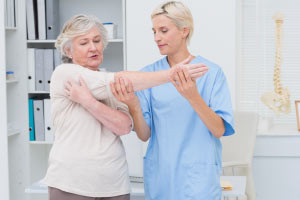
- Define and identify principles of good body mechanics
- Name the eight general considerations for performing physical tasks
- Describe the basic principles for positioning and turning patients
- Describe techniques for maintaining the proper body alignment of a patient
- Describe the different ways of positioning a patient
- Identify the actions which should be taken if a patient begins to fall
- Identify the effects of immobility on the body
- Define the nine types of body movement
- Identify guidelines for range-of-motion exercises

By the end of this course, you will be able to:

- List factors which influence eating patterns
- Create a specialised diet when given a list of the diet contents
- Discuss how a therapeutic diet can support a patient's recovery and maintain a healthy body
- Identify the role of the registered dietitian and their responsibility for the patient's nutritional care
- Identify diets to meet patients' diverse medical and recovery needs
- Cite a specialised diet when given a description of the diet contents
- Identify the responsibilities of the practical nurse in relation to diet therapy
- Identify factors which may alter a patient's food intake due to illness
- Identify reasons that hospitalised patients are at risk of being malnourished

After completing this course you will be able to:

- Discuss the purpose of performing a physical examination
- Discuss the factors to consider when working with diverse patient groups i.e. older patients and Infants
- Discuss the principles, procedures, supplies, and equipment used to obtain different sample types
- Discuss the reasons for obtaining a blood culture and the supplies equipment required
- Identify the basic techniques used in performing a physical assessment
- Discuss how to effectively interview your patient to gather subjective and objective medical data
- Discuss types of Blood Pressure and their Physiologically impact
- Identify anatomical sites where the blood pressure may be taken

By the end of this course, you will be able to:

- Define normal behaviour
- Identify the characteristics of normal behaviour and defence mechanisms
- Describe the range of neurotic and psychotic behavioural tendencies
- Identify therapeutic and drug interventions to treat abnormal behaviours
- Discuss the causes, signs and symptoms of burnout
- Identify types and classification of depression
- State the causes, signs and symptoms of depression


Preguntas frecuentes
Once you have completed your purchase, your Digital Certificate/Digital Diploma and Transcript can be downloaded from the Dashboard of your Alison Account.
I access Alison via my computer:
Expand the Your Completed Courses & Claimed Certificates widget in your dashboard as shown below:
You will then be able to download your Digital Certificate/Diploma and Transcript. 
I access Alison via my Mobile Browser:
Expand the Your Completed Courses & Claimed Certificates widget in your Dashboard as shown below:
You will then be able to download your Digital Certificate/Diploma and Transcript. 
I access Alison via App:
Open My Certificates in your Dashboard, as shown in the example below:

You will then be able to download your Digital Certificate/Diploma and Transcript.

Continuing Professional Development, or CPD, is the process of continually developing or maintaining your professional skills. CPD helps individuals focus on how they can become a more competent and effective professional. Due to our rigorous publishing review process, courses on Alison are now being accredited by CPD UK, an independent organisation. Accredited CPD training means the learning activity has reached the required Continuing Professional Development standards and benchmarks, and the learning value has been scrutinised to ensure integrity and quality. This CPD Certification Service provides recognised independent CPD accreditation compatible with global CPD requirements. This means a certificate from a course on Alison can now be used as part of your CPD requirements (please check with your organisation’s guidelines). You can find out more about Alison accreditation here.
Users can pay a nominal fee to automatically download Digital Certificates or purchase paper or framed Certificates that are shipped via mail. For a more detailed list of the costs, visit the Shop page.