






Free CPD-accredited course gives learners the scientific foundation to engage with one of the most consequential — and most misunderstood — energy debates of our time
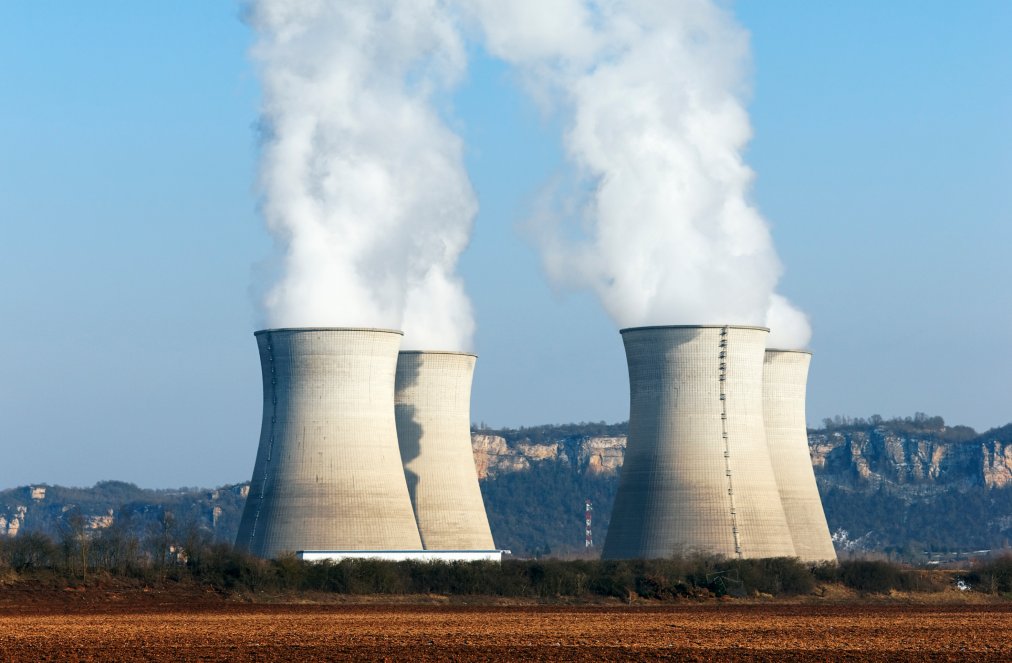
Nuclear power is back — and the companies driving its revival are not energy utilities. They are the world's largest technology firms, each confronting the same problem: artificial intelligence and cloud computing require staggering quantities of uninterrupted, carbon-free electricity, and renewables alone cannot reliably provide it. Microsoft has signed a 20-year power purchase agreement with Constellation Energy to restart Unit 1 of the Three Mile Island facility in Pennsylvania — renamed the Crane Clean Energy Center — with a planned 2027 return to operation. Google has partnered with Kairos Power in a first-of-its-kind corporate agreement to deploy a fleet of advanced small modular reactors, targeting the first commercial unit by 2030 and 500 megawatts of capacity by 2035. Amazon has invested hundreds of millions into the sector, anchoring a funding round for X-energy and partnering with Energy Northwest and Dominion Energy on projects targeting up to five gigawatts of new nuclear capacity. Combined with shifting government policies and billions in federal loans, this corporate backing has effectively triggered a nuclear renaissance. After a long period of stagnation, nuclear power is firmly back on the global agenda.
The IEA's net-zero pathway requires nuclear capacity to nearly double from roughly 415 gigawatts to over 800 gigawatts by 2050 — an expansion that, alongside the massive scale-up of renewables and advanced technologies, forms the foundation of the global transition to a clean energy economy. Dozens of countries — from Poland to Kenya, from Japan to the UK — are actively planning new nuclear programmes. The reason is not nostalgia. It is arithmetic. Decarbonising the electricity grid requires large volumes of reliable, weather-independent, low-carbon power. Nuclear is the only mature technology that provides it at scale.
Alison has launched a new free, CPD-accredited course — Introduction to Nuclear Power for Clean Energy — to give anyone the scientific grounding to understand what is actually at stake. The course covers atomic structure, radioactivity, nuclear fission, chain reactions, reactor design, safety systems, and uranium fuel cycles, before moving into the next generation of nuclear technologies: small modular reactors, fast-neutron reactors, and thorium reactors. It is advanced level, built for learners who want more than a surface-level introduction.
Strong Opinions, Weak Foundations
Few topics attract more confident, poorly-informed opinions than nuclear power. The fears that shaped public perception — Chernobyl in 1986, Fukushima in 2011 — are real events with real consequences, but they are also routinely misrepresented in ways that distort the risk picture considerably. Statistically, nuclear power produces fewer deaths per unit of energy than coal, oil, gas, or even some renewables. The carbon footprint of nuclear over its lifecycle is comparable to wind. Yet polls consistently show that public opposition remains high in many countries, driven largely by anxiety that has outrun understanding.
The course is explicitly designed to close that gap — not to advocate for nuclear, but to give learners the tools to evaluate the arguments themselves. What is technically sound? What is exaggerated? What is missing from the debate? Those are questions that require actual knowledge of how reactors work, what radiation means in practice, and how modern safety systems differ from the designs that failed in the 20th century.
The Technology the 21st Century Didn't Expect to Need
Perhaps the most striking aspect of the nuclear renaissance is who is driving it. The technology companies investing in small modular reactors are not ideologically committed to nuclear — they are operationally dependent on baseload power that renewables alone cannot reliably provide. SMRs, which can be factory-built, deployed at smaller scale, and sited closer to demand, represent a genuinely different proposition from the giant plants of previous decades. Thorium reactors — also covered in the course — offer the prospect of a fuel cycle that produces far less long-lived radioactive waste and has no weapons application, addressing two of the most persistent objections to nuclear expansion.
Mike Feerick, Founder and CEO of Alison, stated: "Nuclear energy may be the defining energy debate of the next 20 years — and it is a debate that most people are not equipped to participate in meaningfully. The science is not inaccessible, but it needs to be taught. This course gives anyone, anywhere, the foundation to understand what nuclear power actually is, how it works, and what role it might play in a low-carbon future — and to make up their own mind based on evidence rather than fear."
The course is available now through any desktop browser or the Alison App on Android and iOS, with a free digital Certificate on completion.
To learn more or enrol, visit: https://alison.com/course/introduction-to-nuclear-power-for-clean-energy
For a broader view of the clean energy transition, explore the IEA Net Zero Roadmap.
Ends
Media contact
For further information, contact the media team at [email protected].
About Alison
Alison is a global leader in free online learning and skills development. With over 50 million registered learners across 193 countries (as of October 2025), Alison empowers individuals, communities, and organisations to upskill quickly and effectively – at zero cost.
The Alison platform provides immediate access to over 6,000 free, CPD-accredited courses, covering essential areas such as Artificial Intelligence, Data Science, Cybersecurity, Digital Marketing, Project Management, Business Operations, Healthcare and Sustainability. Courses are created by a mix of independent experts and global leaders, including IBM, Stanford and Microsoft.
For organisations, Alison offers a Free Learning Management System (LMS) that enables unlimited learners to access thousands of courses with no upfront cost. A premium version with advanced analytics and customisation is also available. Alison's offering includes a full suite of assessments and psychometric tools, including a Workplace Personality Assessment, Mental Health & Wellbeing Assessment, English Language Proficiency Test, as well as Numerical, Verbal, and Abstract Reasoning tests.
To further support career development, learners also gain access to a Career Guide, a Resumé Builder, and the ability to study offline through the Alison App. The platform is also expanding its reach with multilingual versions, starting with complete Spanish, French, and Hindi offerings — reaffirming its mission to make education accessible to anyone, anywhere.
Founded in 2007, Alison pioneered the concept of free, large-scale online learning and is recognised as the world’s first MOOC (Massive Open Online Course) platform. Today, its mission continues: to break down barriers to learning, helping people gain skills, build confidence, and improve their lives — no matter where they live or what they earn.