
Matthew Storer is an award-winning landscape and night photographer from the outback in South Australia. The last decade has seen him travel to and photograph more than 100 countries around the world. He uses his passion for photography to help educate and inspire other photographers to capture images of the world the way they see it!
Mathew is a landscape, night and travel photographer, exploring the world to

By the end of this course, you will be able to:
- State the importance of creating a photo catalog in Adobe Lightroom
- Recall the two methods of importing photos in Adobe Lightroom
- Explain the purpose of rating photos in Adobe Lightroom
- State the functions of a histogram in AdobeLightroom
- Identify various local adjustment tools in Adobe Lightroom and state their functions
- Describe how to separate two colors from each other in Adobe Lightroom
- Distinguish between a landscape and cityscape image
- State the functions of the exposure slider in Adobe Lightroom
- Explain what is meant by lowlight images
- Distinguish between shadows and highlights
- Define clipping and recall the types of clipping in Adobe Lightroom
- Explain what noise is in photography

By the end of this course, you will be able to:

- Explain the functions of the clone tool in Adobe Lightroom
- Indicate when to use the clone or heal tool
- State the use of a preset in Adobe Lightroom
- Recall the steps to creating presets in Adobe Lightroom
- Distinguish between dodging and burning effect
- Discuss the Orton effect on photos
- Recall the process of creating sun flare effects
- Recall the methods of exporting images in Adobe Lightroom
- Distinguish between the various types of image formats
- State the image format and settings for exporting web design images
- Describe the image format for exporting an image that would be printed
- Explain the process of export presets in Adobe Lightroom

By the end of this course, you will be able to:
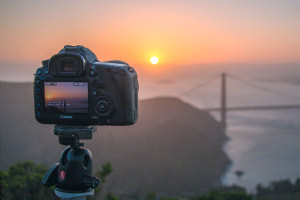
- Outline the basic equipment required for capturing beautiful nature photography
- Explain ISO, aperture, and shutter speed and how these elements affect nature and landscape photography
- State the importance of focusing and describe its relationship with aperture
- Define a histogram and describe how to read it and its benefits to landscape photography
- Explain the effects of filters and identify which filter is best for landscape photography
- Identify the type of metering mode to be used in landscape photography
- Distinguish between RAW and JPEG stating the preferred format for landscape photography images
- Discuss how to focus in telephoto photography

By the end of this course, you will be able to:
- Define the term, "expose to the right" and the impact of exposing to the right in nature and landscape photography
- Discuss how to combine elements to get the best out of composition
- Describe how to frame an image when looking at different perspectives
- Recognize the basic composition skills needed in capturing images
- Explain how to use S and Z curves to create leading lines
- State the relationship between leading lines and diagonals
- Distinguish wide angle photography from telephoto photography
- Explain how to create better composition using telephoto lens
- Describe how to create scales using different focal ranges and framing

By the end of this course, you will be able to:
- Distinguish between a folder and a subfolder
- State the importance of creating a photo catalog in Lightroom
- Explain the purpose of rating photos in Adobe Lightroom
- State the functions of Adobe Lightroom histogram
- Identify various local adjustment tools in Adobe Lightroom and state their functions
- Distinguish between a landscape and a cityscape image
- Recall various shortcuts used in Adobe Lightroom
- Recall the steps to creating presets in Adobe Lightroom
- Recall the process of creating sun flare effects
- State the image format and settings for exporting web design images
- Discuss how to export presets


Frequently Asked Questions
Once you have completed your purchase, your Digital Certificate/Digital Diploma and Transcript can be downloaded from the Dashboard of your Alison Account.
I access Alison via my computer:
Expand the Your Completed Courses & Claimed Certificates widget in your dashboard as shown below:
You will then be able to download your Digital Certificate/Diploma and Transcript. 
I access Alison via my Mobile Browser:
Expand the Your Completed Courses & Claimed Certificates widget in your Dashboard as shown below:
You will then be able to download your Digital Certificate/Diploma and Transcript. 
I access Alison via App:
Open My Certificates in your Dashboard, as shown in the example below:

You will then be able to download your Digital Certificate/Diploma and Transcript.

Continuing Professional Development, or CPD, is the process of continually developing or maintaining your professional skills. CPD helps individuals focus on how they can become a more competent and effective professional. Due to our rigorous publishing review process, courses on Alison are now being accredited by CPD UK, an independent organisation. Accredited CPD training means the learning activity has reached the required Continuing Professional Development standards and benchmarks, and the learning value has been scrutinised to ensure integrity and quality. This CPD Certification Service provides recognised independent CPD accreditation compatible with global CPD requirements. This means a certificate from a course on Alison can now be used as part of your CPD requirements (please check with your organisation’s guidelines). You can find out more about Alison accreditation here.
Users can pay a nominal fee to automatically download Digital Certificates or purchase paper or framed Certificates that are shipped via mail. For a more detailed list of the costs, visit the Shop page.