







Free CPD-Accredited Intermediate Certificate Course Gives Quality Engineers and Process Improvement Professionals the Skills to Design Experiments, Reduce Variation, and Optimise Performance Systematically
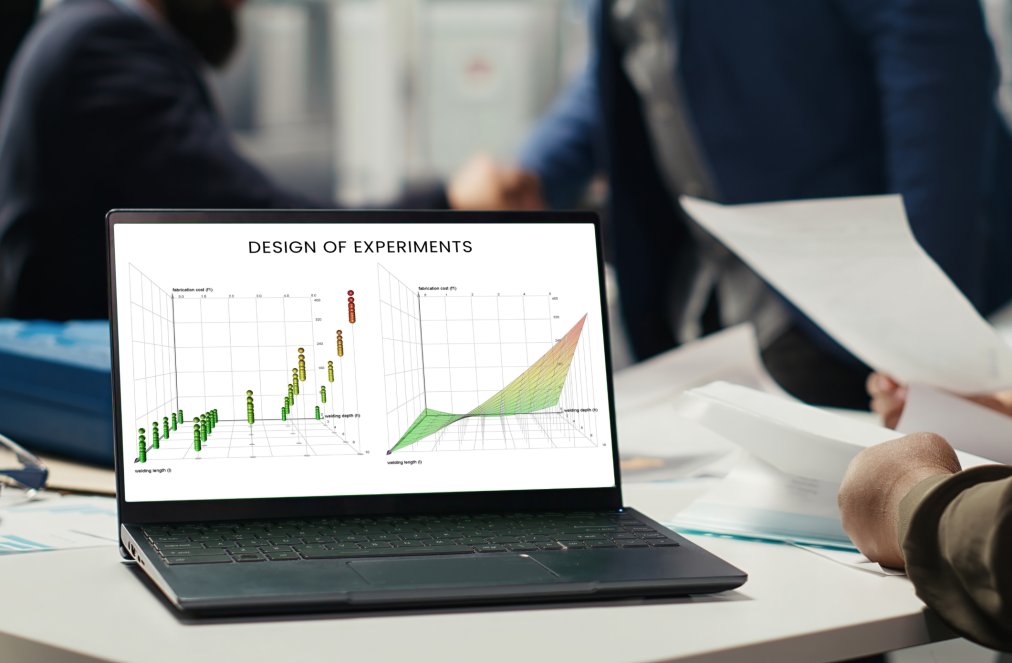
Alison has launched a new CPD-accredited certificate course: Design of Experiments (DOE) and DFSS Optimisation. This free intermediate-level online programme gives quality professionals, engineers, and Six Sigma practitioners a structured introduction to DOE and Design for Six Sigma — covering experimental planning, factor selection, structured run arrangements, statistical analysis of results, system design requirements, concept evaluation, and reliability verification — all grounded in the evidence-based methods that underpin systematic quality improvement.
The course was reviewed by Eve, a Quality Engineer with over twelve years of experience in process improvement, statistical analysis, continuous improvement, and product compliance. Certified as a BSI ISO 9001 and ISO 14001 internal auditor, Eve has applied DOE, Statistical Process Control, ANOVA, and Measurement System Analysis in real-world manufacturing and medical device environments — fields where the consequences of process variation are measured in defect rates, regulatory findings, and patient safety. Her practical experience shaped the course's emphasis on how these tools are applied in real improvement projects, not just how they are understood in theory.
The Limits of Trial and Error
Most organisations approach process optimisation the same way: change one variable at a time, observe what happens, and repeat. It is slow, it is expensive, and it has a fundamental flaw: it misses interaction effects. When the optimal setting for one process variable depends on the level of another, trial-and-error approaches cannot find it — they can only stumble towards it through an increasing number of costly and inconclusive experiments.
Design of Experiments was developed precisely to solve this problem. By testing multiple variables simultaneously in a structured arrangement, DOE separates the individual and combined effects of process inputs on outputs, identifies which factors matter most, and determines optimal settings with far fewer experimental runs than unstructured approaches require. In manufacturing, this translates to faster process development, fewer defects, less rework, and a statistical basis for the decisions that govern production. In complex environments such as medical device manufacturing — subject to FDA quality system regulations and ISO 13485 requirements — DOE provides the documented, scientifically sound evidence that regulators and auditors require.
Design for Six Sigma extends the same logic upstream: rather than optimising a process that already exists, DFSS applies statistical rigour and systematic design methodology to build quality and reliability into products and systems before production begins. The principle is that detecting and correcting a quality problem at the design stage costs a fraction of what it costs to detect it in manufacturing, and a tiny fraction of what it costs to detect it in the field.
Both methodologies are part of the established Six Sigma quality improvement framework, used across manufacturing, healthcare, aerospace, and engineering, and recognised in quality management standards globally. Access to proper training in these tools has typically been restricted to expensive Green Belt and Black Belt certification programmes, placing them beyond the reach of many quality professionals who would use them if they could.
Expertise from Real Improvement Environments
Eve brings the perspective of someone who has used these tools to solve real process problems in some of the most demanding quality environments: "This course provides a clear and practical introduction to Design of Experiments and Design for Six Sigma. The content is well-structured and accessible to learners who want to build a solid foundation in these essential quality improvement tools."
Mike Feerick, Founder and CEO of Alison, added: "The methods covered in this course have a proven track record of improving quality and reducing waste across some of the world's most demanding industries. They should be accessible to every quality professional who wants to use them — not just those who can afford specialist certification programmes. This course changes that."
This launch strengthens Alison's quality management and engineering portfolio, reinforcing its mission to make professional-grade technical learning freely available to everyone.
To learn more or enrol in the course, visit: alison.com/course/design-of-experiments-doe-and-dfss-optimisation
Ends
Media contact
For further information, contact the media team at [email protected].
About Alison
Alison is a global leader in free online learning and skills development. With over 50 million registered learners across 193 countries (as of October 2025), Alison empowers individuals, communities, and organisations to upskill quickly and effectively – at zero cost.
The Alison platform provides immediate access to over 6,000 free, CPD-accredited courses, covering essential areas such as Artificial Intelligence, Data Science, Cybersecurity, Digital Marketing, Project Management, Business Operations, Healthcare and Sustainability. Courses are created by a mix of independent experts and global leaders, including IBM, Stanford and Microsoft.
For organisations, Alison offers a Free Learning Management System (LMS) that enables unlimited learners to access thousands of courses with no upfront cost. A premium version with advanced analytics and customisation is also available. Alison's offering includes a full suite of assessments and psychometric tools, including a Workplace Personality Assessment, Mental Health & Wellbeing Assessment, English Language Proficiency Test, as well as Numerical, Verbal, and Abstract Reasoning tests.
To further support career development, learners also gain access to a Career Guide, a Resumé Builder, and the ability to study offline through the Alison App. The platform is also expanding its reach with multilingual versions, starting with complete Spanish, French, and Hindi offerings — reaffirming its mission to make education accessible to anyone, anywhere.
Founded in 2007, Alison pioneered the concept of free, large-scale online learning and is recognised as the world’s first MOOC (Massive Open Online Course) platform. Today, its mission continues: to break down barriers to learning, helping people gain skills, build confidence, and improve their lives — no matter where they live or what they earn.