




Free CPD-Accredited Intermediate Certificate Course Gives Food Industry Workers and Quality Professionals the Knowledge to Build, Apply, and Sustain Effective Quality Control Systems
Alison has launched a new CPD-accredited certificate course: Principles of Quality Control in the Food Industry. This free intermediate-level online programme gives food production workers, quality technicians, supervisors, and aspiring food industry professionals the grounding to understand what food quality means in practice, identify and classify the factors that affect it, distinguish quality control from quality assurance, apply QC tools to real production problems, and understand how teams and management systems work together to maintain consistency.
The course was reviewed by Jeremy Carter, CP-FS, PCQI, a food safety and regulatory compliance consultant with over fifteen years of experience across FDA- and USDA/FSIS-regulated environments. As the owner of What's On Your Plate? Consulting, Jeremy specialises in HACCP plan development, FSMA preventive controls, and food labelling compliance, and holds CP-FS, PCQI, HACCP, and FSSC 22000 Fundamentals certifications. His work includes building quality systems from the ground up for food businesses — developing practical, audit-ready programs grounded in actual regulatory requirements rather than theoretical frameworks. His expertise ensured the course connects core QC principles to the standards and references that professionals in regulated food environments rely on daily.
The Cost of Getting Quality Wrong
The WHO estimates that 600 million people fall ill from contaminated food each year, resulting in 420,000 deaths. These are primarily safety failures — but food quality and food safety are not separate systems. The processes that maintain product consistency, prevent contamination, and ensure that what leaves a facility matches specifications are the same processes that protect consumers and shield businesses from the regulatory and reputational consequences of getting it wrong.
Food recalls cost manufacturers not just the direct expense of product recovery and destruction, but the far larger costs of regulatory scrutiny, brand damage, and lost retail listings. The FDA's Food Safety Modernization Act fundamentally shifted the regulatory expectation in the United States: the law mandates a preventive approach to both safety and quality hazards, requiring documented systems that identify risks, implement controls, and verify that those controls are working. The logic is the same whether the failure is microbiological or sensory: a quality problem that reaches the consumer is a failure of the system that should have caught it earlier.
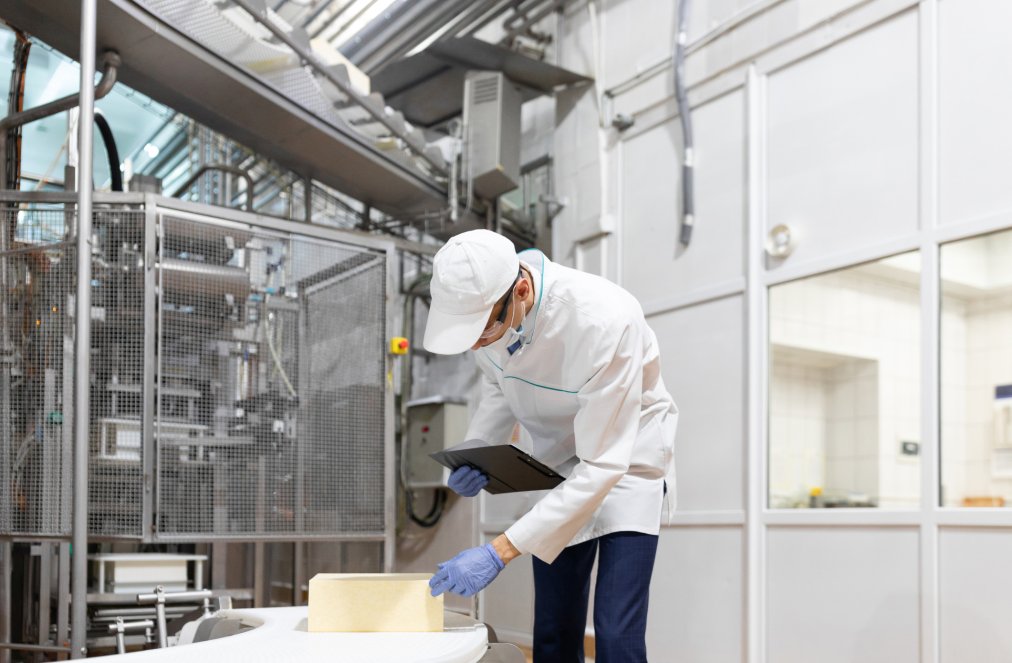
The workers responsible for implementing that system on the production floor — the technicians conducting incoming material checks, the line supervisors managing hold procedures, the quality staff running sensory evaluations — are the frontline of food quality. Their understanding of why QC procedures exist, what they are designed to detect, and how to use QC tools to respond when something goes wrong determines whether a quality system actually functions or simply exists on paper.
From Principles to Practice
Jeremy Carter brings the perspective of someone who has built and audited these systems across multiple regulated environments: "Quality control in the food industry is not just about catching defects. It is about building systems that consistently prevent them in the first place. This course lays a strong foundation in the sensory, chemical, and procedural factors that shape food quality, and connects those concepts to the standards and references that professionals rely on in the field."
Mike Feerick, Founder and CEO of Alison, added: "Food quality is not an abstract standard — it is what consumers experience every time they open a product, and what regulators audit every time they inspect a facility. The people who maintain that quality deserve access to proper training in the principles behind the work they do. This course gives them that, for free."
This launch adds to Alison's growing food safety and industry portfolio, reinforcing its mission to make professional-grade learning freely accessible to everyone who needs it.
To learn more or enrol in the course, visit: alison.com/course/principles-of-quality-control-in-the-food-industry
Ends
Media contact
For further information, contact the media team at [email protected].
About Alison
Alison is a global leader in free online learning and skills development. With over 50 million registered learners across 193 countries (as of October 2025), Alison empowers individuals, communities, and organisations to upskill quickly and effectively – at zero cost.
The Alison platform provides immediate access to over 6,000 free, CPD-accredited courses, covering essential areas such as Artificial Intelligence, Data Science, Cybersecurity, Digital Marketing, Project Management, Business Operations, Healthcare and Sustainability. Courses are created by a mix of independent experts and global leaders, including IBM, Stanford and Microsoft.
For organisations, Alison offers a Free Learning Management System (LMS) that enables unlimited learners to access thousands of courses with no upfront cost. A premium version with advanced analytics and customisation is also available. Alison's offering includes a full suite of assessments and psychometric tools, including a Workplace Personality Assessment, Mental Health & Wellbeing Assessment, English Language Proficiency Test, as well as Numerical, Verbal, and Abstract Reasoning tests.
To further support career development, learners also gain access to a Career Guide, a Resumé Builder, and the ability to study offline through the Alison App. The platform is also expanding its reach with multilingual versions, starting with complete Spanish, French, and Hindi offerings — reaffirming its mission to make education accessible to anyone, anywhere.
Founded in 2007, Alison pioneered the concept of free, large-scale online learning and is recognised as the world’s first MOOC (Massive Open Online Course) platform. Today, its mission continues: to break down barriers to learning, helping people gain skills, build confidence, and improve their lives — no matter where they live or what they earn.