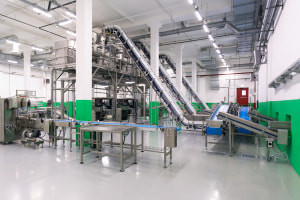
‘Automated manufacturing’ refers to the use of equipment to automate systems or production processes. The end goal is to drive greater efficiency by either enhancing production capacity or reducing costs. The prime focus of this course relies on two important topics: fabrication and sensors in industrial automation. We begin by illustrating the various components of a fully-fledged automated system. You will discover the prime factors considered in the selection process of the components. Next, we teach you about the process of utilising computer-aided design (CAD) in the drafting of mechanical parts. This will include creating a technical drawing using both 2D and 3D to design, assess and document mechanical components. Following this, you will study the technologies used to generate three-dimensional, solid objects under computer control. We then explore the key fabrication processes like laser cutting technology, machinery for stamping, handling, fitting and painting steel modules and components.
Next, the course highlights the significance of sensors in a typical automated system for manufacturing. We outline the principal operations, constructional details and the essential applications of various sensors used in the automated industry. We examine the role of a sensor in a control and automation system in detecting and measuring physical effects by providing information to the control system. Following this, we instruct you on the importance of employing proximity sensors in automated manufacturing systems (AMS). You will analyse how these sensors utilise sound waves to detect objects by creating an electromagnetic field around itself or on a sensing surface. We discuss the types, applications and specificity of using the various proximity sensors. We advise you of the role of transducers in an automated system and help you realise how these transducers are employed at the boundaries of automation, measurement and control systems to convert electrical signals to and from other physical quantities.
The final section explains measuring fluid flow and pressure using sensors and transducers. You will research the integration of strain gauges with the diaphragm in ascertaining the fluid pressure. We prepare you for the procedure of using a flow meter to measure the linear, nonlinear, mass or volumetric flow rate of a liquid or a gas. In addition, you will discover how flow measurement becomes a major component in the overall economic success or failure of any given manufacturing process. Lastly, you will study the process of computing information based on the attributes of real-world environmental interaction. The different types of tactile sensors, including piezoresistive, piezoelectric, capacitive and elastoresistive sensors, are described. ‘Understanding Fabrication and Sensors in Automated Systems’ is an informative course that dwells on the idea to use raw materials and computer data to create real, solid objects. This course will teach the techniques and principles of making smart products automatically.
What You Will Learn In This Free Course
View All Learning Outcomes View Less All Alison courses are free to enrol, study, and complete. To successfully complete this Certificate course and become an Alison Graduate, you need to achieve 80% or higher in each course assessment.
Once you have completed this Certificate course, you have the option to acquire an official Certificate, which is a great way to share your achievement with the world.
Your Alison certificate is:
- Ideal for sharing with potential employers.
- Great for your CV, professional social media profiles, and job applications.
- An indication of your commitment to continuously learn, upskill, and achieve high results.
- An incentive for you to continue empowering yourself through lifelong learning.
Alison offers 2 types of Certificate for completed Certificate courses:
- Digital Certificate: a downloadable Certificate in PDF format immediately available to you when you complete your purchase.
- Physical Certificate: a physical version of your officially branded and security-marked Certificate
All Certificate are available to purchase through the Alison Shop. For more information on purchasing Alison Certificate, please visit our FAQs. If you decide not to purchase your Alison Certificate, you can still demonstrate your achievement by sharing your Learner Record or Learner Achievement Verification, both of which are accessible from your Account Settings.








 Avg. Hours
  Contains Video
  CPD Accredited
 Total XP:
 Knowledge & Skills You Will Learn