All proceeds from Advanced Medical Certification support the Save a Life Initiative and the Disque Foundation, a non-profit organization with a mission of advancing healthcare education for the underserved worldwide. This funding provides much-needed life support training in areas such as Haiti, Ethiopia, Malaysia, Costa Rica, Panama, and the United States.
In conjunc

By the end of this course, you will be able to:
- Define ‘first aid’ and list the items found in a first-aid kit
- Discuss personal protective equipment (PPE), scene safety and hand-washing
- Identify medical problems, their causes, symptoms and first-aid procedures
- Explain how to handle traumatic injuries
- Analyze how to provide CPR on choking infants
- Describe chest compressions and mask-use for children, infants and adults
- Discuss giving breaths and activating emergency medical services (EMS)
- Recall causes, symptoms and how to care for individuals with medical problems
- Outline symptoms and first aid steps for an individual with environmental injuries or illnesses
- List the symptoms of choking in infants, children and adults

By the end of this course, you will be able to:
- Explain how to determine if an individual is conscious or unconscious
- Outline the steps in the chain of survival
- Explain the anatomy and physiology of the heart
- List equipment used in airway management
- Summarize the principles of early defibrillation
- List the symptoms of bradycardia and tachycardia
- Explain how to care for acute coronary syndrome
- Recall the process for performing one-person basic life support (BLS) on an adult
- Summarize the steps taken to perform successful airway management
- List the proper steps for using an automated external defibrillator
- Recognize ACLS core rhythms
- Describe the intended use of advanced cardiovascular life support (ACLS)

By the end of this course, you will be able to:
- Explain the importance of pediatric advanced life support (PALS)
- Explain PALS basic life support (BLS)
- Describe how to administer BLS for children and infants
- Identify when a child or infant is experiencing a life-threatening emergency
- Explain the importance of resuscitation tools in PALS
- Recognize the various signs and symptoms of respiratory distress or failure
- Explain the procedure for responding to bradycardia
- Explain the procedure for responding to tachycardia
- Identify the key indicators to check for when carrying out post-resuscitation care
- Describe the process of assessing a child’s or an infant’s airway
- Identify the most preferable solution based on airway assessment
- Describe the process of performing an infant one-person BLS and two-person BLS

By the end of this course, you will be able to:
- Describe the details of the 2020-2025 guideline changes in basic life support
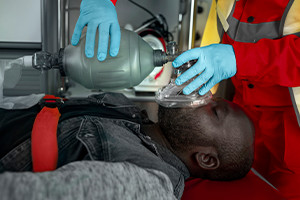
- Discuss how to perform adult mouth-to-mask ventilation
- Outline ‘bag-mask’ ventilation in two-rescuer CPR for adults
- Outline the steps of performing CPR on children
- Explain the one-rescuer and the two-rescuer BLS for infants between 0 to 12 months old
- Identify the AED steps for children and infants
- Paraphrase the adult ‘chain of survival’ and its pediatric counterpart
- Distinguish between one-rescuer and the two-rescuer BLS for children
- Illustrate how to open a child’s airway
- Explain how to deliver mouth-to-mouth rescue breathing
- Explain how to perform mouth-to-mouth rescue breathing on adults and older children
- Explain how to perform mouth-to-mouth and nose-rescue breathing for infants

By the end of this course, you will be able to:
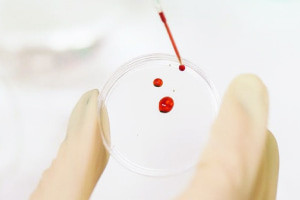
- Identify sources of bloodborne pathogens (BBPs)
- Explain the risks involved when working with blood
- Explain the importance of personal protective equipment (PPE) for preventing transmission of BBPs
- Describe how BBPs are transmitted
- Outline how to clean up blood and blood-containing fluids appropriately
- State how to avoid exposure to BBPs from the use of ‘sharps’
- Recall how to respond after exposure
- Summarize how to establish a core sense of responsibility among participants to prevent exposure to BBPs

By the end of this course, you will be able to:
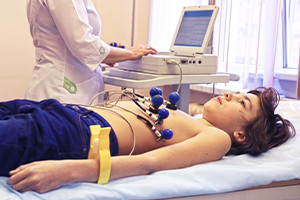
- Identify normal sinus rhythms on an electrocardiogram (ECG)
- Distinguish between normal sinus rhythms and abnormal ECG patterns in potential cardiac disorders
- Analyse ECG waveform morphology to assess the presence of atrial and ventricular hypertrophy
- Explain the underlying mechanisms involved in different ECG rhythm patterns
- Discuss the physiological and pathological factors that lead to specific ECG rhythm abnormalities
- Categorise ECG rhythms into groups based on waveform patterns and clinical significance
- Recognise and differentiate between atrial and ventricular fibrillation, bradycardia and tachycardia
- State how the adult Cardiac Arrest Algorithm helps manage cardiac arrest in adult patients
- Outline the importance of post-cardiac care
- Review the basic life support (BLS) procedures provided by one or two healthcare personnel
- Summarise the basics of cardiopulmonary resuscitation (CPR)
- Distinguish between the CPR procedure used on adults and infants

By the end of this course, you will be able to:
- Discuss how to respond to various accidents, injuries and other emergencies
- Explain why ensuring the safety of the victim and the caregiver is the first step to providing aid
- Distinguish between physical health and mental health first aid
- Recognise and respond appropriately to environmental emergencies such as hypothermia and heat stroke
- Discuss how to treat allergic reactions and poisonings effectively
- List the preventive measures a first aider should take in hazardous environments
- Define ‘first aid’ and its aims and discuss the importance of early intervention in emergencies
- Describe the five-step ALGEE plan used to intervene in mental health crises
- Outline the appropriate first-aid measures for managing common medical emergencies
- Describe the protective measures used against bloodborne pathogens
- Identify and effectively treat traumatic injuries, such as burns, fractures and bleeding
- Summarise the basic first-aid measures for venomous animal bites and stings


Preguntas frecuentes
Once you have completed your purchase, your Digital Certificate/Digital Diploma and Transcript can be downloaded from the Dashboard of your Alison Account.
I access Alison via my computer:
Expand the Your Completed Courses & Claimed Certificates widget in your dashboard as shown below:
You will then be able to download your Digital Certificate/Diploma and Transcript. 
I access Alison via my Mobile Browser:
Expand the Your Completed Courses & Claimed Certificates widget in your Dashboard as shown below:
You will then be able to download your Digital Certificate/Diploma and Transcript. 
I access Alison via App:
Open My Certificates in your Dashboard, as shown in the example below:

You will then be able to download your Digital Certificate/Diploma and Transcript.

Continuing Professional Development, or CPD, is the process of continually developing or maintaining your professional skills. CPD helps individuals focus on how they can become a more competent and effective professional. Due to our rigorous publishing review process, courses on Alison are now being accredited by CPD UK, an independent organisation. Accredited CPD training means the learning activity has reached the required Continuing Professional Development standards and benchmarks, and the learning value has been scrutinised to ensure integrity and quality. This CPD Certification Service provides recognised independent CPD accreditation compatible with global CPD requirements. This means a certificate from a course on Alison can now be used as part of your CPD requirements (please check with your organisation’s guidelines). You can find out more about Alison accreditation here.
Users can pay a nominal fee to automatically download Digital Certificates or purchase paper or framed Certificates that are shipped via mail. For a more detailed list of the costs, visit the Shop page.