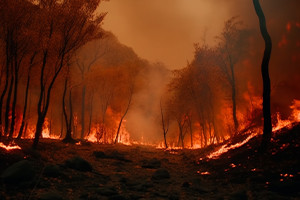
The curriculum delves into the complexities of surviving nuclear threats, responding to natural disasters like earthquakes and wildfires, and protecting oneself from identity theft. Advance Learning’s courses blend academic theory with real-life applications, ensuring learners gain both understanding and practical skills. The self-paced format

By the end of this course, you will be able to:
- State how to protect financial information on your computer
- Identify how to be more aware of identity theft
- Explain how identity theft occurs and the damage it can cause you
- List the best methods to protect your computer
- Discuss the importance of making staff aware of the issue
- Recall how to decide what is real and what is fake or fraudulent online

By the end of this course, you will be able to:
- State the types of threats resulting from a nuclear explosion
- Describe the consequences and impact of a nuclear blast
- Outline the safety measures to take during a nuclear attack
- Identify what ‘fallout’ is and how to deal with it
- List the types of food and drink that you can safely consume after fallout
- Explain some of the injuries that a nuclear explosion might cause
- Outline how to build a shelter
- Describe the essential items you may wish to store
- Discuss the return to health and vigour of Japan's bombed cities of Nagasaki and Hiroshima
- Recall the steps necessary to reduce the effect of a blast

By the end of this course, you will be able to:
- Discuss nuclear weapons tests from 1945 to 1980
- List the German scientists who discovered nuclear fission and then state the concerns about their discovery
- Recall which US physicist led the Manhattan Project and the 'Trinity Test' in 1945
- Describe the arms race and the treaties that have reduced the number of weapons in the world up to the present
- Outline the findings of UNSCEAR on the presence of radioactive materials on the earth
- State which crop was found to have 30 times more radioactivity in 1958 than pre-1945 samples
- Describe the features of a nuclear explosion and the three damage zones
- Explain the difference between an atomic and a thermonuclear bomb
- Describe the underground Cannikin test in Alaska in 1971
- Discuss whether an underground explosion causes an earthquake
- State the events around the USA’s first underwater test
- Recall the history of Hiroshima and Nagasaki

By the end of this course, you will be able to:
- Describe how nuclear fallout is created and recall what to do if an attack is imminent
- Outline how to remove fallout from your person and what to do with pets exposed to fallout
- Recall some of the key scientific terms used around fallout and explain what half-life means
- Discuss different types of radiation and common isotopes found in nuclear fallout
- Recall the first two disasters to receive the highest ranking on the INES scale
- Distinguish the different measurements used for radiation doses
- Relate some of the findings of the UN's report regarding Chernobyl and Fukushima
- List some countries with compensation schemes for workers impacted by radiation or fallout

By the end of this course, you will be able to:
- Define ‘active shooter’
- Outline the three steps to take if an active shooter enters your working environment
- Explain how to prepare for an active shooting
- Describe possible actions to take if the suspect is nearby or if you are outside
- Recall the questions you must answer when you call law enforcement during an active shooter situation
- Discuss the goals of the primary and secondary waves of law enforcement
- Outline the potential symptoms of employee violence
- Identify the three main classes of workplace violence
- Define an ‘EAP’ and establish its importance
- Explain how managers can prepare their personnel for an active shooter scenario

By the end of this course, you will be able to:
- By the end of this course, you will be able to:Discuss why earthquakes occur
- Outline how to measure an earthquake
- Describe the hazards associated with earthquakes
- Compare different scenarios and actions to take in various situations
- Define ‘earthquake’ and explain how it can cause damage
- Describe plate tectonics and how faults arise
- List the factors that influence an earthquake's intensity
- Define 'aftershocks'
- Outline how to prepare for an earthquake
- Explain what to do during an earthquake
- Identify the resources available once the ground has stopped shaking

By the end of this course, you will be able to:
- Discuss how global climate change is fuelling extreme weather conditions
- Define the ‘heat index’ and discuss its significance in assessing human comfort and safety
- Outline the benefits of planning outdoor activities during cooler periods
- Compare direct and indirect consequences of high temperatures
- Assess the appropriate fabrics and styles for various temperatures and situations
- Plan some exterior modifications that improve heat management
- Summarise how to empower people with extreme heat preparedness
- Recall the best heat-preventative measures for athletes, outdoor workers and low-income groups
- Discuss heat emergency protocols for guiding actions and coordinating effective responses during extreme heat events
- Discuss the most important first aid techniques used to respond to any heat-related emergency
- Summarise the factors that can influence heat-related risks and outline their impact
- Outline important considerations for safeguarding children, elderly individuals and pregnant women from heat

By the end of this course, you will be able to:
- Recognise where wildfires occur, naturally or otherwise
- Outline the different kinds of wildfires
- Define the ‘wildland-urban interface’ (WUI)
- Explain how to prepare for wildfires on an individual and community level
- Describe the effects of a wildfire after it has passed through your area
- Outline safety guidelines one should follow when a wildfire is nearby and how to minimise fire hazards
- Plan how to handle the recovery of your property after a fire
- Discuss what natural disaster refugees might do after a wildfire event
- Illustrate why it's important to follow the instructions of the local authorities, including evacuation orders
- Evaluate the increase in wildfire occurrence and the combination of factors to which it is attributed


Preguntas frecuentes
Once you have completed your purchase, your Digital Certificate/Digital Diploma and Transcript can be downloaded from the Dashboard of your Alison Account.
I access Alison via my computer:
Expand the Your Completed Courses & Claimed Certificates widget in your dashboard as shown below:
You will then be able to download your Digital Certificate/Diploma and Transcript. 
I access Alison via my Mobile Browser:
Expand the Your Completed Courses & Claimed Certificates widget in your Dashboard as shown below:
You will then be able to download your Digital Certificate/Diploma and Transcript. 
I access Alison via App:
Open My Certificates in your Dashboard, as shown in the example below:

You will then be able to download your Digital Certificate/Diploma and Transcript.

Continuing Professional Development, or CPD, is the process of continually developing or maintaining your professional skills. CPD helps individuals focus on how they can become a more competent and effective professional. Due to our rigorous publishing review process, courses on Alison are now being accredited by CPD UK, an independent organisation. Accredited CPD training means the learning activity has reached the required Continuing Professional Development standards and benchmarks, and the learning value has been scrutinised to ensure integrity and quality. This CPD Certification Service provides recognised independent CPD accreditation compatible with global CPD requirements. This means a certificate from a course on Alison can now be used as part of your CPD requirements (please check with your organisation’s guidelines). You can find out more about Alison accreditation here.
Users can pay a nominal fee to automatically download Digital Certificates or purchase paper or framed Certificates that are shipped via mail. For a more detailed list of the costs, visit the Shop page.