








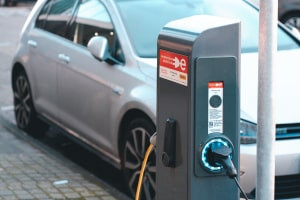
Understanding Electric Vehicle Chargers
Back To Understanding Electric Vehicle Chargers
Enrolled6-10 Hours (Contains Video)
Save This Course For Later
 Certify Now
Certify Now
Confident you have the skills to certify without completing the course content?
![]() Advanced Level
Advanced Level

Understanding Electric Vehicle Chargers
Learn how to design, use and manage electric vehicle chargers in this free online engineering course.
Save This Course For Later
Certify NowCertify Now
Confident you have the skills to certify without completing the course content?
- Enrolled
![]() Positive Ratings
Positive Ratings ![]()
- Avg. Duration6-10 Hours (Contains Video)
![]()
- Available Languages (1)
![en]() English
English
![]()
 This course is
CPD-Accredited

 English


Confident you have the skills to certify without completing the course content?
Certify NowLearning Outcomes
Having completed this course you will be able to:
- Identify different types of chargers and their specifications
- Explain how public chargers function
- Discuss swappable batteries and swapping stations
- Outline different international standards for chargers
- Unpack cell-level monitoring in battery packs
- Appreciate the importance of thermal monitoring
- Describe how data storage can predict the state of health and life cycles of a battery
- Understand the benefits of data analytics for business operators
Course Overview
About This Course
Course Description
Read More
Published by


Showcase Skills With A Certificate!
![]() Earn credentials that matter: Anyone can say they’re learning. A CPD-accredited Alison Certificate proves you followed through.
Earn credentials that matter: Anyone can say they’re learning. A CPD-accredited Alison Certificate proves you followed through.![]() Get an edge over others: Add your Certificate to your CV, LinkedIn, and Alison Profile to strengthen job applications and promotion opportunities.
Get an edge over others: Add your Certificate to your CV, LinkedIn, and Alison Profile to strengthen job applications and promotion opportunities.![]() Show you’re serious about growth: A Certificate signals initiative, commitment, and a willingness to keep learning; qualities employers actively look for.
Show you’re serious about growth: A Certificate signals initiative, commitment, and a willingness to keep learning; qualities employers actively look for.


Course Rating & Reviews
 -Positive Ratings
Reviews
Loading...
Loading...
Loading...
Loading...
Loading...
Loading...
View All Reviews![]()

Back to top
Back to course information

Download Courses And Learn Without Internet!
Use your iOS or Android devices to download Alison courses, and learn without internet on the Alison App.


Advertisement
Explore Related Courses

Interested In This Course For Your Team?
16,000 organisations use Alison for Business to upskill their teams


 Total XP:


