One of the fascinating aspects of water on Earth is that it is seldom created or destroyed. It is simply transformed and conveyed as part of Earth's dynamic hydrological cycle. In this process, however, it may become contaminated as rivers and streams are often considered suitable ways of disposing of debris and wastes. Groundwater resource pollution has also become a significant problem worldwide as industrial waste, fertilisers and pesticides infiltrate aquifers from the surface, which then reach the general public and animals through contaminated springs and wells. This advanced course explores the causes of, and solutions to, this dilemma through ‘river training’ and stabilisation.
This specialised civil engineering course will begin by introducing the river stabilisation theory. You will discuss the ideas of jet scours, maintaining national waterways and the advanced technology used for navigating river systems. Next, you will explore structural features such as locks and dams and go over the advantages of dredging floodways with case studies to cement the acquired knowledge. The effects of bridge construction on fluvial morphology and river stabilisations will be explained, focusing on river erosion problems in the Ganges, Brahmaputra and various alluvial rivers. The course then goes into the ways of stabilising the river bank from disintegration, explaining the design guidelines, including using physics and basic river mechanics to show how to maximise riverbank protection. The design theory and construction of a riprap revetment will also be outlined, enabling you to control streambank erosion.
The significance of river protection mechanisms to protect river banks from the environmental damage caused by erosion and human activity is essential. The course will highlight the theory and minimum specification required in the design and placement of levees and examine the effectiveness of planting vegetation close to the riverbank to minimise erosion and increase the river system’s health. Following this, the course will explain the usage of windrows, trenches, gabions, mattresses, retaining walls and spurs, which are all part of the geotechnical engineering process. Examples and case studies will be used to illustrate and apply knowledge gained from the course. If you are passionate about the environment and saving our planet, this course is for you. Start today and become successful in protecting our river systems with this appealing branch of engineering!
What You Will Learn In This Free Course
View All Learning Outcomes View Less All Alison courses are free to enrol, study, and complete. To successfully complete this Certificate course and become an Alison Graduate, you need to achieve 80% or higher in each course assessment.
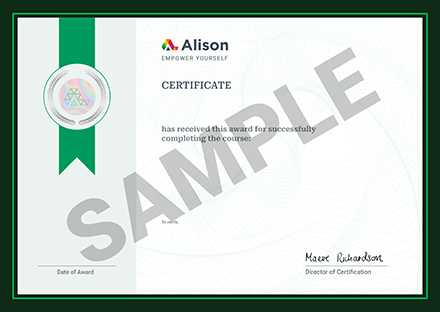
Once you have completed this Certificate course, you have the option to acquire an official Certificate, which is a great way to share your achievement with the world.
Your Alison certificate is:
- Ideal for sharing with potential employers.
- Great for your CV, professional social media profiles, and job applications.
- An indication of your commitment to continuously learn, upskill, and achieve high results.
- An incentive for you to continue empowering yourself through lifelong learning.
Alison offers 2 types of Certificate for completed Certificate courses:
- Digital Certificate: a downloadable Certificate in PDF format immediately available to you when you complete your purchase.
- Physical Certificate: a physical version of your officially branded and security-marked Certificate
All Certificate are available to purchase through the Alison Shop. For more information on purchasing Alison Certificate, please visit our FAQs. If you decide not to purchase your Alison Certificate, you can still demonstrate your achievement by sharing your Learner Record or Learner Achievement Verification, both of which are accessible from your Account Settings.









 Avg. Hours
 Contains Video
 CPD Accredited

 Total XP:
 Knowledge & Skills You Will Learn