


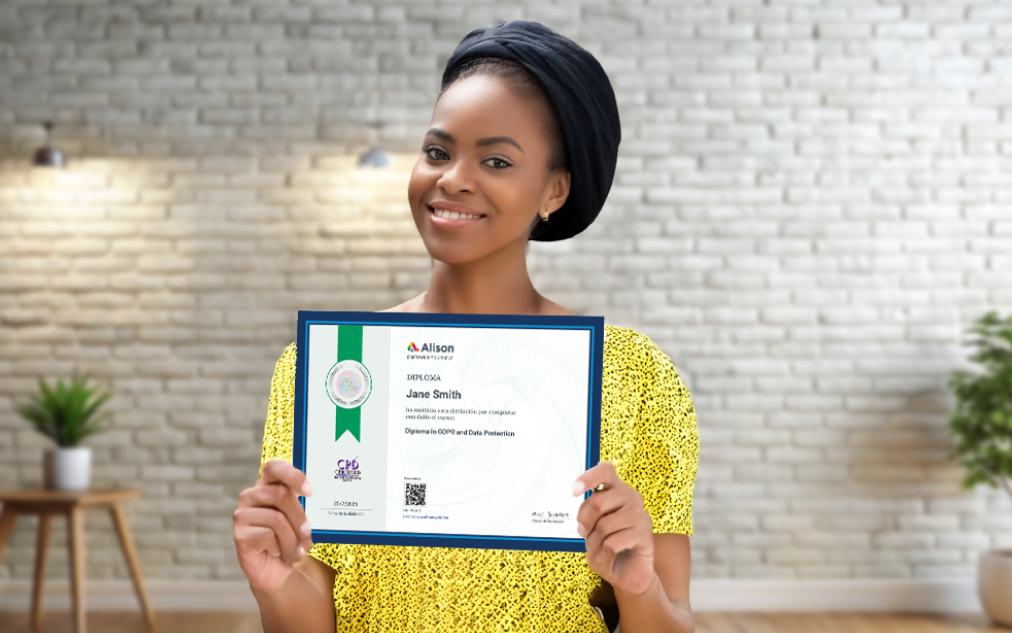
Alison has long been a trusted option for South Africans who want to upskill quickly and keep learning without putting life on pause. In fact, South Africa is Alison’s 5th largest learner base worldwide.
If you’re learning with Alison in South Africa, whether you’re just getting started or returning to finish what you began, it helps to know how to position your achievement so employers understand it. This guide explains how employers typically view Alison Certificates, how they differ from SAQA-aligned and formal qualifications, and how to present them accurately on your CV and in interviews. The goal is simple. To help you use your Alison Certificates strategically and confidently to support your next career step.
Are Alison Certificates Recognised in South Africa?
While Alison Certificates are not officially accredited by SAQA (the South African Qualifications Authority), they are widely used in South Africa for skills development, CV enhancement, and professional learning. For many employers, Alison Certificates serve as practical evidence of initiative and job-relevant knowledge. When professionals pair them with relevant projects, work samples, or experience, they become a powerful asset in their careers. It is important to note, however, that Alison Certificates should be presented as certificates of completion, not as formal qualifications.
What “Recognition” Means in South Africa
Recognition vs Accreditation
In South Africa, “recognition” often means an employer or recruiter considers a certificate credible and relevant for a job application. Accreditation is different: it refers to formal alignment with South Africa’s national education and qualifications system, including SAQA and the National Qualifications Framework (NQF). So if you’re asking “Is Alison recognised in South Africa?”, the answer can be “yes” in an employer context, even though Alison Certificates are not formally accredited by SAQA.
Skills Certificates vs Formal Qualifications
It’s important to understand the difference between skills certificates and formal qualifications.
Skills certificates are short and flexible learning programmes focused on practical, job-ready training. They allow you to enter the workforce faster without the need for traditional degrees. This is where Alison Certificates come in. They serve as proof of learning and course completion and can support employability, especially for entry-level roles or career changes.
Formal qualifications differ: they typically carry an NQF level and may be required for admissions, regulated professions, or roles that explicitly require SAQA or NQF credentials.
Alison Certificates should be used to demonstrate skills and initiative, not as a substitute for an accredited qualification.
Is Alison Accredited by SAQA?
The simple answer is no. Alison is not accredited by SAQA, and Alison Certificates are not NQF-registered qualifications in South Africa. If a role or institution specifically requires SAQA or NQF accreditation, an Alison Certificate won’t meet that formal requirement.
What SAQA Accredits
SAQA is part of South Africa’s national qualifications system and is closely linked to the NQF. In practice, SAQA-related requirements apply when a qualification must be formally recognised within South Africa’s education and training framework, such as for admissions, verification, or regulated pathways.
Why Does Alison Not Appear on SAQA?
Alison provides online courses and issues Certificates of completion for skills-based learning. Our Certificates are designed for professional development and upskilling rather than being registered as South African qualifications on the NQF, which is why Alison does not appear as a SAQA-accredited provider.
When SAQA Accreditation is Required
SAQA or NQF requirements are most relevant when you need a formal qualification, including:
- University or TVET (Technical and Vocational Education and Training) admissions that require specific recognised qualifications
- Jobs that specify an NQF level or SAQA-accredited qualification required
- Regulated professions where licensing or statutory requirements apply

Do Employers in South Africa Accept Alison Certificates?
Often, yes, as supporting evidence of skills, but not as a formal qualification. Employer acceptance typically depends on three things: relevance to the role, proof you can apply the skill, and overall fit (experience, communication, work history). Alison Certificates tend to be most useful when they support a clear story: “I learned X, and here’s how I used it.”
Employer Mindset in South Africa
Recruiters and hiring managers usually ask:
- Is this certificate relevant to what we need?
- Does the candidate show initiative and consistency?
- Can they demonstrate the skill in practice (portfolio, task examples, results)?
That’s why the chances of a South African employer accepting an Alison Certificate are greatest when you pair it with something tangible, like a small project, a work sample, or a clear example from your current role.
Industries Where Alison Is Most Useful
Alison Certificates are often most useful in skills-first areas such as:
- IT & Software (foundational concepts, tools, and entry-level skills)
- Business Management (operations, admin, management basics, productivity)
- Sales & Marketing (digital fundamentals, content, analytics basics)
- Workplace Health & Safety (workplace awareness and training support)
Can Alison Certificates Help You Get a Job?
Yes, they can. Alison Certificates are a powerful asset for getting hired, especially for high-demand skills-based roles, making a compelling case in entry-level applications, or confidently navigating a career change.
Career Tools and Resources:
- Resumé Builder: A simple, step-by-step tool that helps you create a clear, job-winning CV using professional templates for free. Add your experience, education and skills in one place, then download a CV that’s easy for recruiters to scan. Useful for first-time CVs, quick updates, or tailoring your CV when applying for a new role.
- Workplace Personality Assessment: This free assessment will help you recognise your work style, strengths, and the environments where you’ll thrive. It will provide insights that empower you to choose roles that better fit you, communicate your strengths in interviews, and focus your development on what will make the biggest difference at work.
- Career Ready Plan: A structured career planning tool that helps you discover suitable career paths and understand exactly what each role requires. After a short assessment, you receive clear information on responsibilities, skills and earning potential, along with a personalised, step-by-step learning plan. It also helps you build a schedule, set reminders and prepare your CV, so you can move forward with clarity and direction towards your chosen career.
- Aptitude Tests: A set of practical assessments designed to help you understand your strengths and natural abilities. These tests measure skills such as numerical reasoning, verbal reasoning, logical thinking and problem-solving, giving you insight into how you process information and approach challenges. Use your results to identify areas to improve, prepare for employer assessments, and make more informed decisions about your career direction.
Are Alison Certificates “Accredited” or “Official”?
This is where wording often gets confusing. Alison Certificates are not SAQA-accredited and are not NQF qualifications, so they shouldn’t be described as formally accredited in South Africa. The most accurate way to describe them is as evidence of professional learning and course completion.
What CPD-Accredited Course Material Means
Alison courses are developed by subject matter experts across education, business, industry, and government, with a focus on practical, workplace-relevant learning. Alison’s course creation process is CPD-accredited, which means the way courses are designed and produced follows recognised continuing professional development quality standards. Alison has also partnered with organisations such as NHCPS for selected healthcare courses and IBM for an AI course, supporting credibility without implying SAQA or NQF accreditation.
What Certificate of Completion Means
An Alison Certificate is best presented as a certificate of completion for an online course. It confirms you completed structured learning in a topic area. It does not confirm an NQF level or replace regulated credentials.
 Free vs Paid Alison Certificates in South Africa
What is Free?
Alison’s online courses in South Africa are free to access, so you can enrol, learn, and complete course content without paying tuition fees. This makes Alison a practical option if you want to build job-relevant knowledge or explore a new skill area before committing to formal study.
What Costs Money?
Learning on Alison is 100% free. After successfully completing a course, you have the option to purchase a Parchment or Digital Diploma or Certificate. The key point is that the cost is tied to certification options, not access to the learning itself.
Choosing Between Upskilling and Formal Accreditation
If you need fast, flexible upskilling for your CV, Alison Certificates can offer good value, especially when paired with proof of skills (projects, work samples, or workplace examples). If you need an NQF-listed qualification or SAQA-related accreditation for admissions or a regulated role, you’ll need a formally accredited South African provider instead.
When Alison Is a Good Choice
Alison is a good choice if you want to:
- Develop your work-readiness through practical, job-relevant learning
- Supplement the skills on your CV with credible, structured online learning
- Fill knowledge gaps in areas like AI, tech, business, marketing, or caregiving
- Explore a flexible way to learn while working, studying, or managing family commitments
- Support interviews with clearer examples of what you’ve learned and can do
Alison may not be suitable if you need:
- A SAQA-accredited qualification or an NQF credential
- Formal requirements for regulated professions (licensing/statutory roles)
- A qualification explicitly required for admissions or specific job levels
Real-World Recognition Across South Africa And Africa
Recognition is not just about formal definitions. It is reflected in how widely a platform is used, trusted and valued in real workplaces.
- More than 1 million Graduates in South Africa have completed Alison courses, showing strong national uptake among professionals focused on staying competitive and employable.
- Learners across Africa are using Alison to strengthen career prospects, improve workplace skills and access structured learning that supports real economic participation.
These milestones highlight practical impact: people across South Africa and the wider continent are actively using Alison to build skills that translate into career growth and opportunity.
Next Steps for South African Learners
If you’re based in South Africa and actively applying for roles, we encourage you to actively complete Alison courses and use them strategically.
Start by choosing courses that directly match the jobs you’re targeting. Read the job description carefully. What skills, tools or responsibilities are mentioned repeatedly? Focus your learning there so your CV aligns clearly with what employers are asking for.
Once you’ve completed a course and earned your Certificate, make it work for you:
- Add it to your CV under “Professional Development” or “Certifications”
- Don’t only list the course title. Include 2 to 3 bullet points explaining what you can now do
- If relevant, mention practical outcomes such as projects completed, case studies analysed or frameworks applied
Update your LinkedIn profile in the same way. Add your Alison Certificate, then briefly describe the practical skills or knowledge you gained. This helps recruiters understand your capability, not just your participation.
If you’re unsure how to present everything clearly, use a structured CV template to organise your experience and certifications in a professional way. Small adjustments in how you present your learning can make a significant difference when applying for opportunities.